
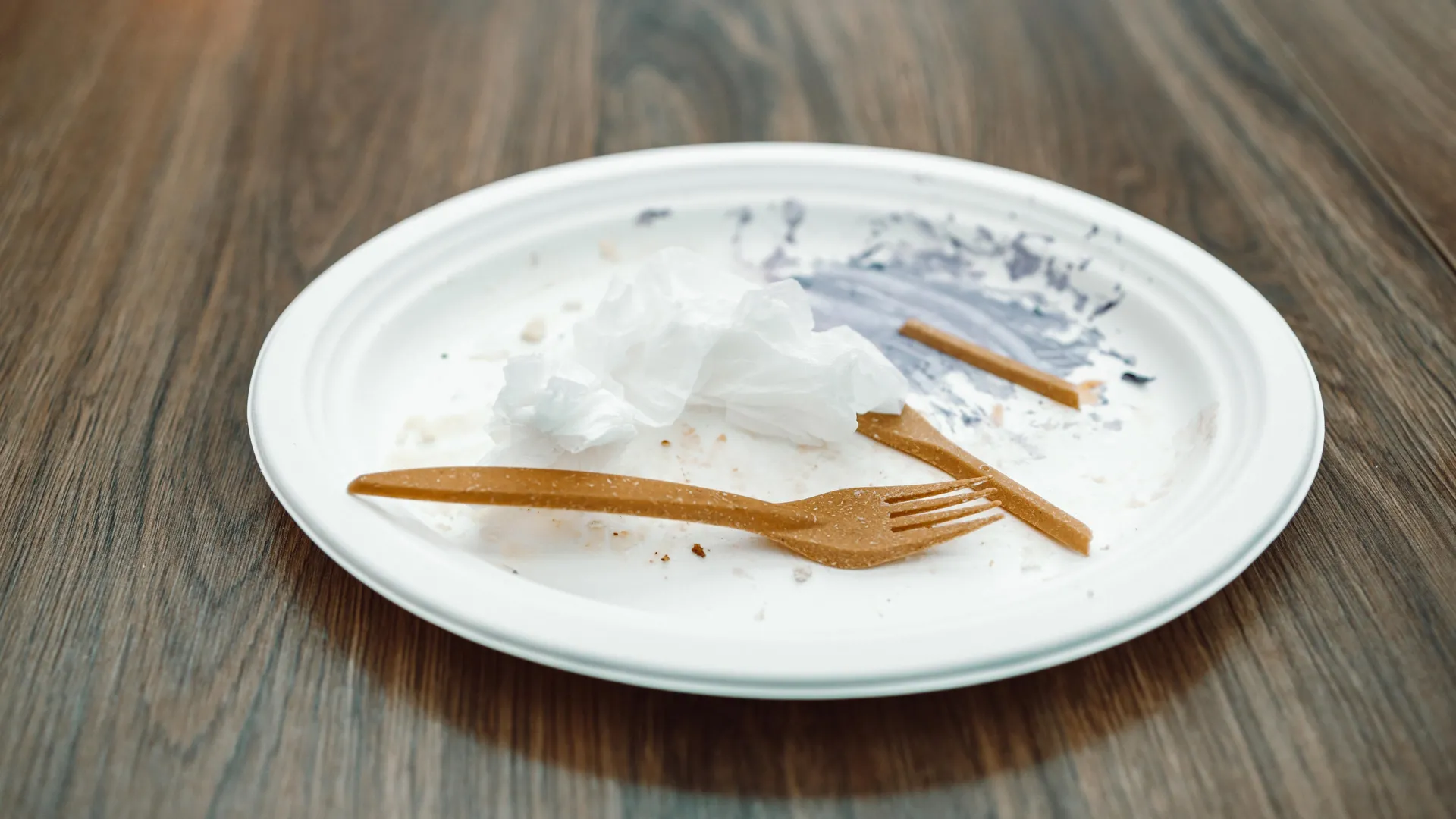
As concerns grow about the environmental and health impacts of plastic waste, scientists are accelerating efforts to develop safer, biodegradable alternatives. At Flinders University in South Australia, several research teams are working on new materials designed to reduce pollution from single use plastics.
In a recent study published in Polymers, researchers created a thin, flexible film using calcium caseinate, a commercially available form of casein, the primary protein found in milk. They blended it with modified starch and bentonite nanoclay, then added glycerol and polyvinyl alcohol to improve durability and flexibility. The goal was to produce a material that performs like conventional plastic while being far more environmentally friendly.
Breaks Down in Soil in 13 Weeks
Tests showed the material steadily decomposed under normal soil conditions, with full breakdown estimated within 13 weeks. The findings provide early evidence that combining biopolymers with nanoclay suspensions can produce functional films suitable for sustainable food packaging.
Safety was also evaluated. Microbial testing found bacterial colony levels remained within acceptable limits for non-antimicrobial biodegradable films, suggesting low toxicity.
“We would recommend further antibacterial evaluations in further testing and development,” says Professor Youhong Tang, a nanomaterials researcher at the Tonsley Campus, Flinders College of Science and Engineering.
Professor Tang, who is part of the Flinders Institute for NanoScale Science and Technology, says developing sustainable alternatives for food packaging and other single use plastic products is essential to slowing the rise of global pollution.
Why Plastic Alternatives Matter
Many plastics contain thousands of chemical additives, including dyes and flame retardants. Some of these substances are toxic or linked to cancer. The Organisation for Economic Co-operation and Development (OECD) has warned that without coordinated international action, plastic production could increase by 70% between 2020 and 2040, surpassing 700 million tonnes annually.
Although certain plastics are technically reusable, most are discarded after one use. An analysis published in Nature estimates that about 60% of plastics are single use, and only 10% are recycled. Plastic production has climbed from 2 million tonnes in 1950 to 475 million tonnes by 2022, roughly equivalent to the weight of 250 million cars.
International Collaboration on Milk-Based Bioplastics
The project involved collaboration with chemical engineering researchers in Colombia, including Nikolay Estiven Gomez Mesa and Professor Alis Yovana Pataquiva-Mateus from the Department of Engineering at Universidad de Bogotá Jorge Tadeo Lozano. Their work in the Nanobioengineering Research Group in Bogotá focused on developing new polymer materials.
“We were experimenting with caseinates to make milk-based nanofibers and found that it could be used to cast polymers similar to common packaging materials,” says Mr. Gomez.
“From there, we began exploring ways to improve their properties by introducing natural and abundant components such as starch, and also a biodegradable polymer with remarkable mechanical features. This also opened the opportunity to integrate nanoclays, like bentonite, which can enhance the film’s strength and barrier performance.
“The entire formulation was designed to use inexpensive ingredients that are biodegradable and environmentally friendly to create a sustainable alternative with enhanced characteristics.”
Professor Pataquiva-Mateus emphasizes the broader impact of the work. “Everyone can play a part in reducing their plastic use, and finding biodegradable polymer alternatives is an important part of science helping to find solutions for industry, consumers, and the environment.
“Most of our single use plastic comes from food packaging, so these sorts of options should be explored further and join the circular economy revolution to conserve resources.”