
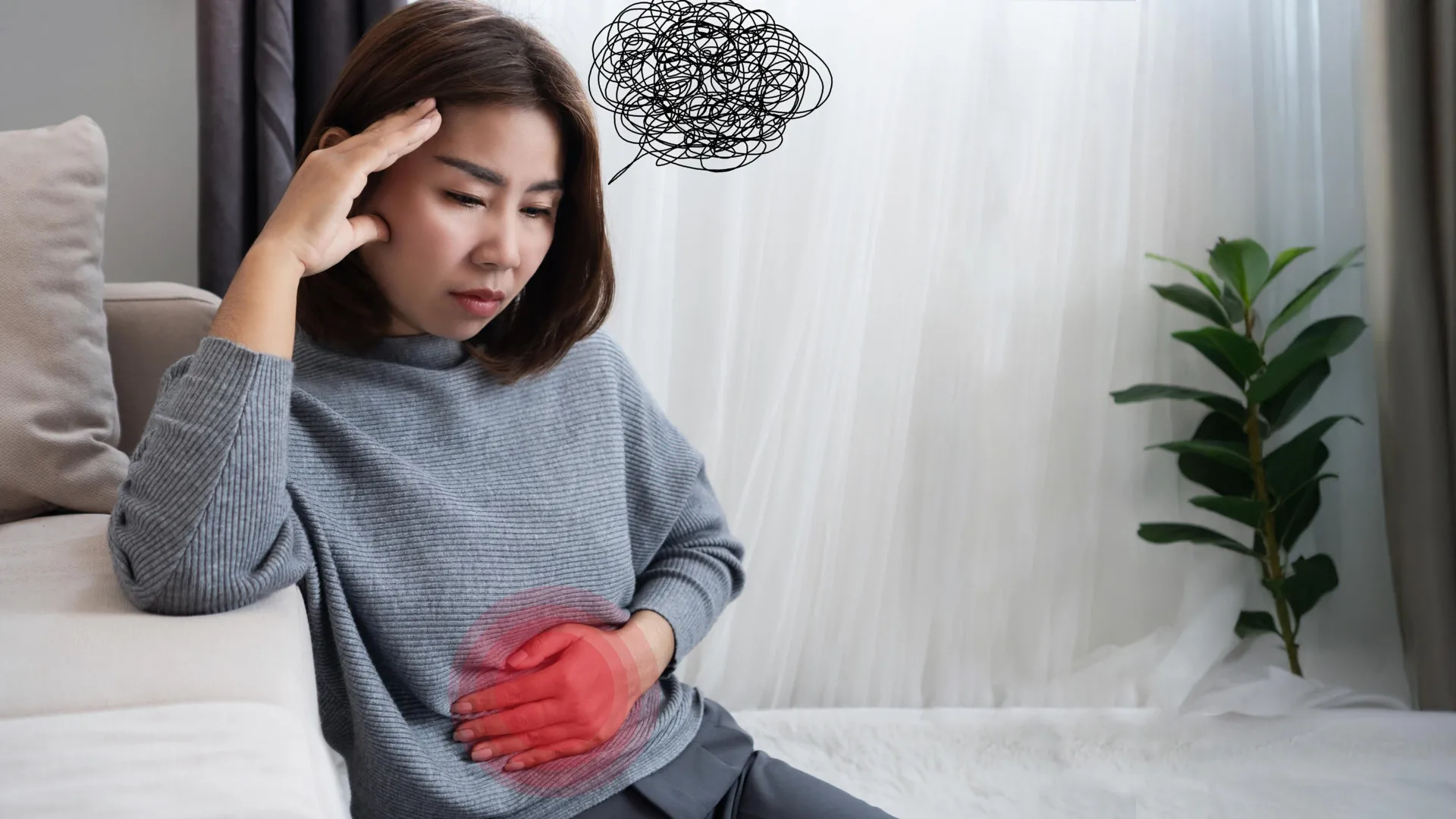
What if an injectable protein could one day help repair both “leaky gut” and severe depression?
New research from the University of Victoria (UVic), published in the journal Chronic Stress, suggests this idea may not be far-fetched. Scientists found that a glycoprotein known as Reelin could play a key role in restoring gut health while also reducing symptoms linked to depression.
How Chronic Stress Weakens the Gut Barrier
In a healthy body, the gastrointestinal system, which includes the stomach, colon, and intestines and is commonly called the “gut,” carefully controls which nutrients pass into the bloodstream.
Chronic stress, along with stress-related conditions such as major depressive disorder (MDD), can disrupt this balance. Over time, the gut barrier may become more permeable, a condition often referred to as “leaky gut.”
When this happens, harmful bacteria and toxins can escape the gut and enter circulation. The immune system may respond with inflammation, which can worsen depressive symptoms. Because of this connection, treatments that strengthen the gut barrier could help reduce the risk or severity of MDD.
Reelin and the Gut-Brain Connection
According to Hector Caruncho, professor of medical sciences at UVic and corresponding author of the study, therapies based on Reelin may offer a new way to address both gut and brain health. Reelin is a protein found throughout the body, including in the brain, blood, liver, and intestines.
“This study aimed to understand the role of Reelin in the gut, especially under conditions of chronic stress,” says Caruncho. “The gut-brain axis is becoming essential to understanding many psychiatric disorders, including depression.”
In preclinical models, the researchers observed that chronic stress reduced Reelin levels in the intestines. However, a single injection of 3 µg of Reelin was enough to restore those levels to normal.
Links to Depression and Gut Repair
Earlier studies have shown that people diagnosed with major depressive disorder have lower levels of Reelin in their brains. Similar reductions have been observed in rodents exposed to chronic stress. In those animals, a single intravenous injection of 3 µg of Reelin produced antidepressant-like effects. Previous work has also demonstrated that Reelin is necessary for healthy renewal of the gut lining.
“Taken together, these results may have important implications for the management of major depressive disorder,” says Ciara Halvorson, a neuroscience PhD student at UVic and the study’s first author. “This is especially true for people who live with both depression and gastrointestinal conditions.
Protecting the Gut to Support Mental Health
Under normal conditions, the cells lining the gut are replaced every four to five days. This rapid renewal is critical because the gut lining is constantly exposed to potentially damaging substances.
“If Reelin protects against leaky gut by supporting the renewal of the gut lining, Reelin may thereby protect against the worsening of depression symptoms triggered by inflammatory immune responses to leaked gut material.”
Although additional research is required before Reelin-based treatments can be used in clinical settings, the findings point to a promising new approach. By targeting both the brain and the gut, Reelin could eventually offer a more comprehensive way to treat depression.
The study was supported by funding from the Canadian Institutes of Health Research (CIHR) and the Natural Sciences and Engineering Research Council of Canada (NSERC).