
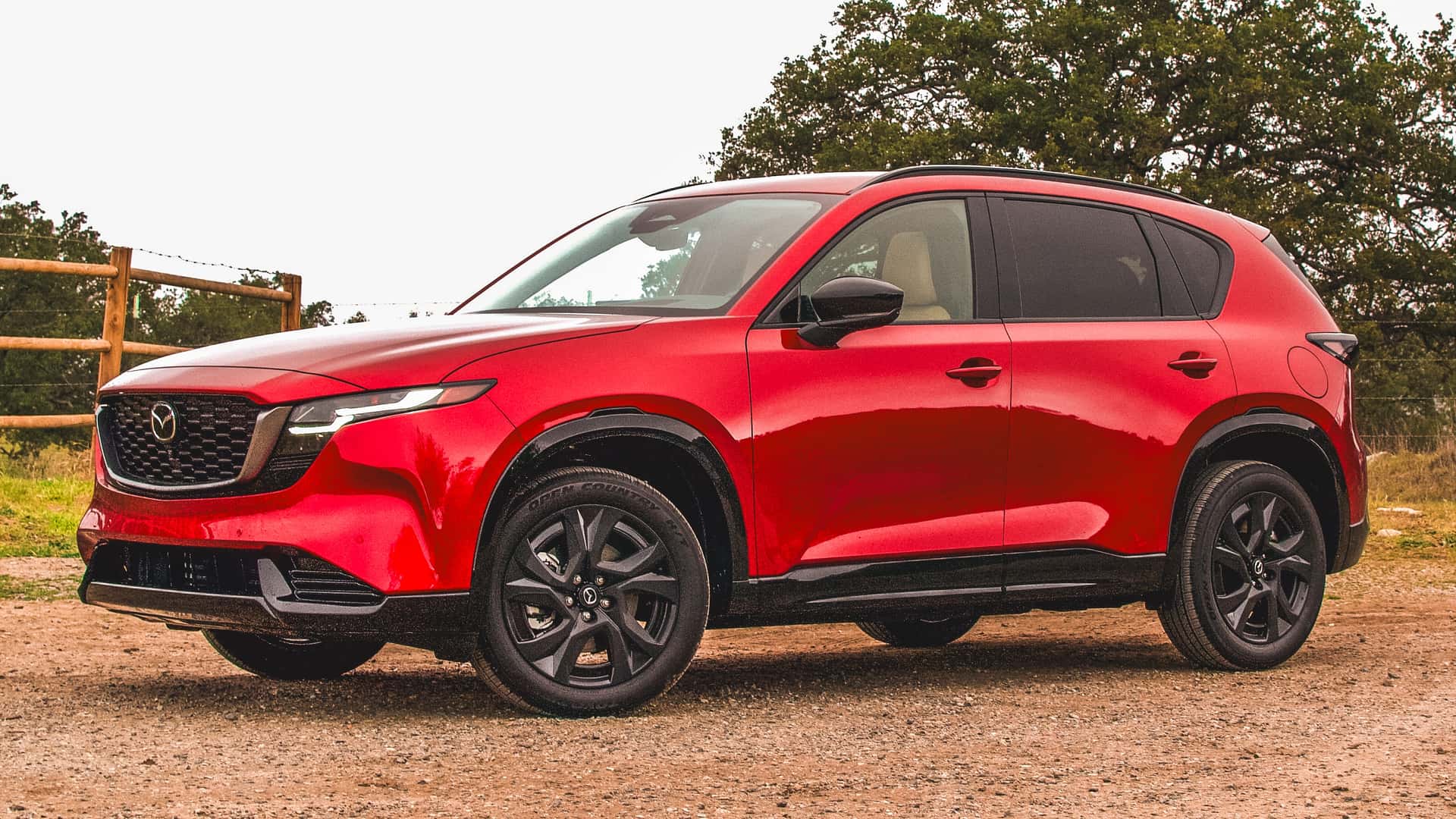
- Mazda CX-5’s Project Manager is not satisfied with the throttle response of competitors’ hybrids.
- Koichiro Yamaguchi claims Mazda will fix this problem when its in-house hybrid tech arrives in 2027.
- The CX-5 will be the first Mazda with an electrified Skyactiv-Z engine.
Mazda has been hyping its new Skyactiv-Z engine and the associated in-house hybrid powertrain for a while. However, it won’t arrive until toward the end of 2027 in the new CX-5, where an all-new 2.5-liter inline-four gasoline engine will sit at the heart of Mazda’s proprietary hybrid system.
In the meantime, Mazda has been testing electrified powertrains from rival brands and believes it has identified a key issue. According to CX-5 Project Manager Koichiro Yamaguchi, many of the hybrids he has benchmarked suffer from delayed throttle response. While he naturally didn’t specify brands or models, the man overseeing the third-generation SUV is determined to ensure Mazda’s own hybrid setup avoids any hesitation when accelerating:
‘I have tried so many different hybrid systems from other brands, but none of them satisfied me, so I decided to make sure we have this unique Mazda hybrid system that will satisfy me. I think a big point is compared to your accelerator throttle input, how the powertrain reacts to that acceleration, whether that acceleration response is comfortable or uncomfortable – I think that’s the big point of judging the hybrid system for me.’

Photo by: Anthony Alaniz / Motor1
Speaking through a translator, Yamaguchi told Australia’s Drive magazine that Mazda’s new hybrid powertrain, centered around the Skyactiv-Z engine, aims to deliver both efficiency and performance. He acknowledged that there are still challenges with the gasoline engine’s low-rpm power delivery, but said the electric motor will compensate for the ICE’s shortcomings. The result, he claims, will be “fun-to-drive driving performance” combined with the level of fuel economy customers expect in the CX-5’s segment.
Mazda’s new combustion engine is being developed to meet Euro 7 regulations as well as the EPA’s Tier 4 standards. It will first launch in vehicles sold in Europe and the United States before rolling out to other markets. The company has promised “even higher thermal efficiency and an overwhelmingly wider range” than the Skyactiv-G and Skyactiv-X engines that the new four-cylinder will replace.
Focusing on efficiency won’t come at the expense of performance. Mazda has previously said that updating its existing engines to comply with stricter emissions regulations would have reduced output by as much as 30 percent. The new Skyactiv-Z, however, is designed to meet increasingly stringent standards without sacrificing power, theoretically delivering the best of both worlds.
While the CX-5 will usher in Mazda’s new electrified powertrain, expect the next-generation engine and in-house hybrid technology to spread to other models. Lessons learned from developing the Skyactiv-Z will also be applied to the company’s larger inline-six engines that power its rear-wheel-drive-based SUVs.
9
Source: Mazda
Motor1’s Take: Let’s face it. Mazda is late to the hybrid party, just as it has been with EVs. However, the company appears extremely confident that its new gasoline engine, paired with an electric motor, will be worth the wait.
With fuel prices remaining high and customers demanding stronger low-end grunt, Mazda’s next-generation hybrid system can’t arrive soon enough. Let’s hope it lives up to the hype the company has been building since 2024.